
How Handheld Ultrasound Is Supporting Earlier Diagnosis and More Accessible Care Across the NHS
Overview
Improving access to timely diagnostics is a central priority within the NHS Long Term Plan, which outlines a future built on earlier diagnosis, digital innovation and more care delivered closer to home.
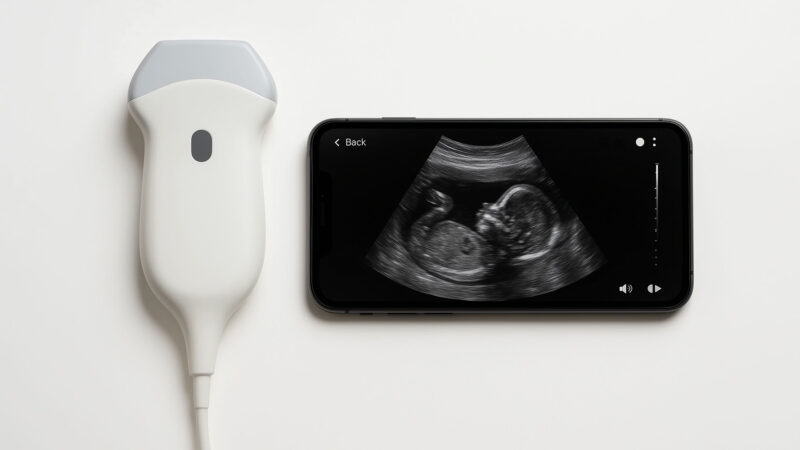
Handheld and point of care ultrasound systems (POCUS) support these aims by providing real time imaging at the point of care, helping clinicians make faster decisions and enhancing the patient experience.
As the NHS continues its shift towards community based and digitally enabled care, handheld ultrasound is becoming a valuable point of care resource that aligns with national priorities, whilst supporting day to day clinical practice.
Benefits
- Portability: Small enough to fit in a coat pocket for use anywhere.
- Quicker diagnosis: Being able to scan at point of care gives clinicians immediate information whilst assessing the patient. This means patients receive clearer, more immediate guidance or reassurance.
- Helps reduce unnecessary referrals and streamline patient flow: By providing prompt insight, clinicians can avoid ordering additional imaging that may not be needed once an initial scan is performed.
- Supports continuity of care: Clinicians can use the same device across multiple settings during the day.
- Clinical confidence: High-resolution imaging and easy connectivity ensure reliable decision-making.
Main clinical users
Critical care and emergency medicine
Primary care and community health
Cardiology
Obstetrics and gynaecology
Midwifery
Mobile diagnostics
Suppliers on our frameworks
- Biospectrum
- Butterfly Network
- Esaote
- Fujifilm UK
- Fujifilm Healthcare (previously Hitachi)
- GE Healthcare
- Mindray
- Orca Medical
- Philips Healthcare
- Prosys International
- Uniphar
- Medtech UK (Cardiac Services).

Handheld Ultrasound Contact Form
If you would like to find out more about handheld ultrasound systems and how they can support care in your organisation, please contact our team using the handheld ultrasound form.
Links section
-
Ultrasound Scanners and Associated Options and Related Services
The framework agreement for Ultrasound Scanners and Associated Options and Related Services.
-
About Us
Information about NHS Supply Chain and our services, overall business plan and more.